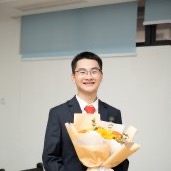
Biography
I was born in Jiangmen, Guangdong, China, in 2001. I am currently a Ph.D. student in Artificial Intelligence in the Faculty of Innovation Engineering at the Macau University of Science and Technology, under the supervision of Prof. Jinyu Tian.
My research works toward secure and trustworthy AI, with a particular interest in protecting visual content from malicious generative editing. My current research directions include:
- Adversarial Machine Learning
- Data Poisoning and Protection
- AI-Generated Content Security
News
- [2026.09] 🎉 One paper is accepted by NeurIPS 2026
- [2025.11] 🎉 One paper is accepted by AAAI 2026
Publications
Deferred Poisoning: Making the Model More Vulnerable via Hessian Singularization
Yuhao He, Jinyu Tian, Xianwei Zheng, Li Dong, Yuanman Li, and Jiantao Zhou
AAAI 2026
[Paper]
[arXiv]
[Code]
[Show details][Hide details]
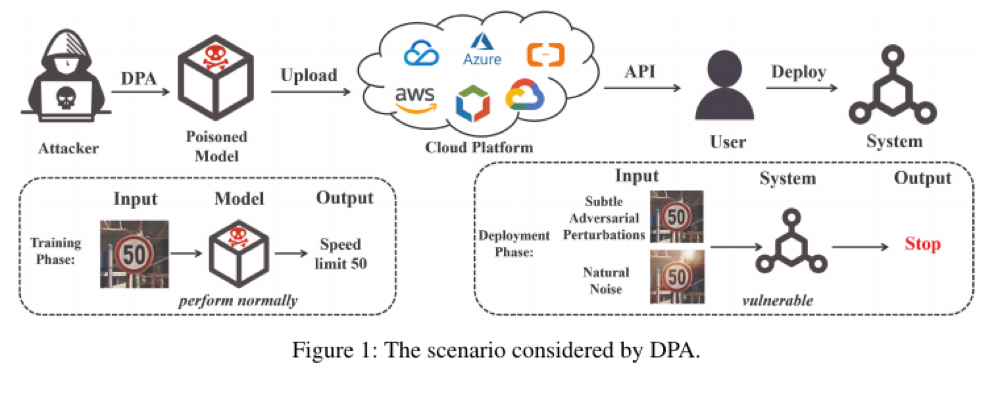
Recent studies have shown that deep learning models are very vulnerable to poisoning attacks. Many defense methods have been proposed to address this issue. However, traditional poisoning attacks are not as threatening as commonly believed. This is because they often cause differences in how the model performs on the training set compared to the validation set. Such inconsistency can alert defenders that their data has been poisoned, allowing them to take the necessary defensive actions. In this paper, we introduce a more threatening type of poisoning attack called the Deferred Poisoning Attack. This new attack allows the model to function normally during the training and validation phases but makes it very sensitive to evasion attacks or even natural noise. We achieve this by ensuring the poisoned model's loss function has a similar value as a normally trained model at each input sample but with a large local curvature. A similar model loss ensures that there is no obvious inconsistency between the training and validation accuracy, demonstrating high stealthiness. On the other hand, the large curvature implies that a small perturbation may cause a significant increase in model loss, leading to substantial performance degradation, which reflects a worse robustness. We fulfill this purpose by making the model have singular Hessian information at the optimal point via our proposed Singularization Regularization term. We have conducted both theoretical and empirical analyses of the proposed method and validated its effectiveness through experiments on image classification tasks. Furthermore, we have confirmed the hazards of this form of poisoning attack under more general scenarios using natural noise, offering a new perspective for research in the field of security.
[MUST News]
[DBLP]
[BibTeX]
@article{he2026deferred,
  author  = {He, Yuhao and Tian, Jinyu and Zheng, Xianwei and Dong, Li and Li, Yuanman and Zhou, Jiantao},
  title   = {Deferred Poisoning: Making the Model More Vulnerable via Hessian Singularization},
  journal = {Proceedings of the AAAI Conference on Artificial Intelligence},
  volume  = {40},
  number  = {26},
  pages   = {21681--21689},
  year    = {2026},
  doi     = {10.1609/aaai.v40i26.39318},
  url     = {https://doi.org/10.1609/aaai.v40i26.39318}
}
Structure Disruption: Subverting Malicious Diffusion-Based Inpainting via Self-Attention Query Perturbation
Yuhao He, Jinyu Tian, Haiwei Wu, and Jianqing Li
arXiv preprint 2025
[Paper]
[Show details][Hide details]
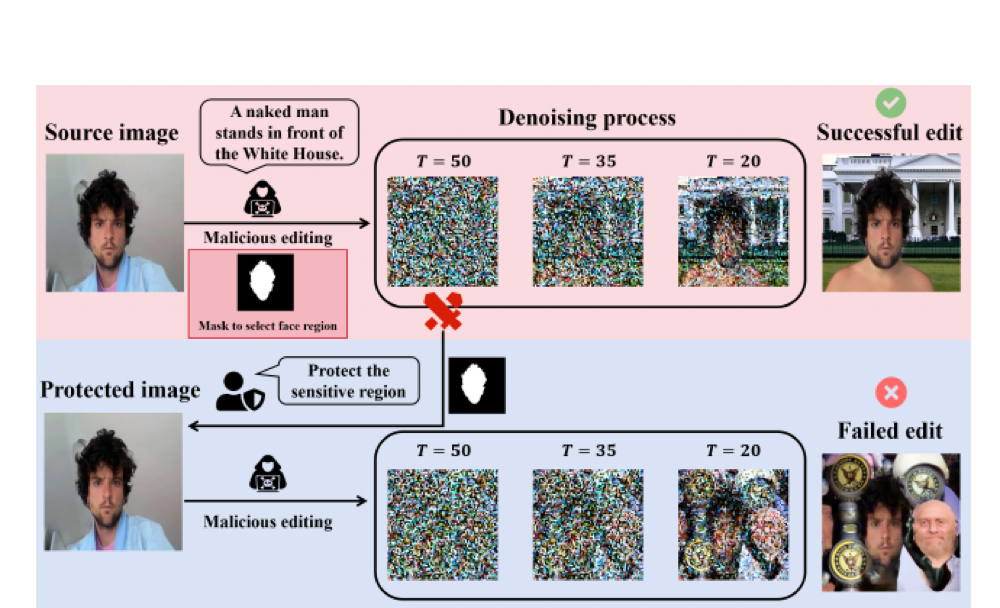
The rapid advancement of diffusion models has enhanced their image inpainting and editing capabilities but also introduced significant societal risks. Adversaries can exploit user images from social media to generate misleading or harmful content. While adversarial perturbations can disrupt inpainting, global perturbation-based methods fail in mask-guided editing tasks due to spatial constraints. To address these challenges, we propose Structure Disruption Attack (SDA), a powerful protection framework for safeguarding sensitive image regions against inpainting-based editing. Building upon the contour-focused nature of self-attention mechanisms of diffusion models, SDA optimizes perturbations by disrupting queries in self-attention during the initial denoising step to destroy the contour generation process. This targeted interference directly disrupts the structural generation capability of diffusion models, effectively preventing them from producing coherent images. We validate our motivation through visualization techniques and extensive experiments on public datasets, demonstrating that SDA achieves state-of-the-art (SOTA) protection performance while maintaining strong robustness.
[DBLP]
[BibTeX]
@misc{he2025structure,
  author        = {He, Yuhao and Tian, Jinyu and Wu, Haiwei and Li, Jianqing},
  title         = {Structure Disruption: Subverting Malicious Diffusion-Based Inpainting via Self-Attention Query Perturbation},
  year          = {2025},
  eprint        = {2505.19425},
  archivePrefix = {arXiv},
  primaryClass  = {cs.CV},
  doi           = {10.48550/arXiv.2505.19425},
  url           = {https://arxiv.org/abs/2505.19425}
}
TFA-CLSTMNN: Novel Convolutional Network for Sound-Based Diagnosis of COVID-19
Yuhao He, Xianwei Zheng, and Qing Miao
IJWMIP 2023
[Paper]
[Code]
[Show details][Hide details]
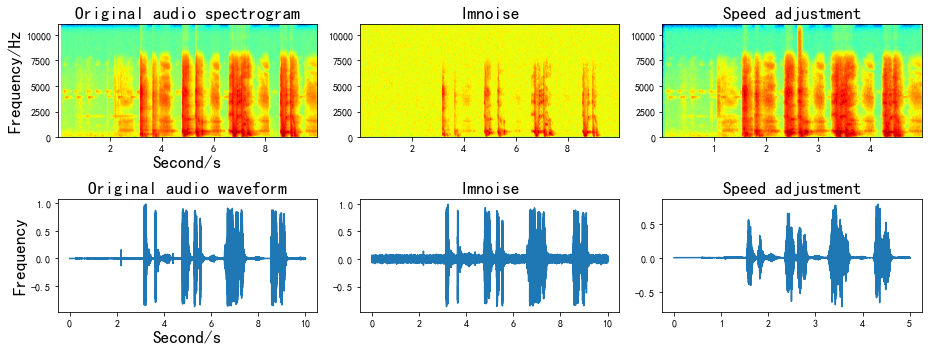
The outbreak of the global COVID-19 pandemic has become a public crisis and is threatening human life in every country. Recently, researchers have developed testing methods via patients cough recordings. In order to improve the testing accuracy, in this paper, we establish a novel COVID-19 sound-based diagnosis framework, i.e. TFA-CLSTMNN, which integrates time-frequency domain features of the recorded cough with the Attention-Convolution Long Short-Term Memory Neural Network. Specifically, we calculate the Mel-frequency cepstrum coefficient (MFCC) of the cough data to extract the time-frequency domain features. We then apply the convolutional neural network and the attentional mechanism on the time-frequency features, which is followed by the long short-term memory neural network to analyze the MFCC features of the data. The recognition and classification can be then carried out to evaluate the positiveness or negativeness of the tested samples. Experimental results show that the proposed TFA-CLSTMNN framework outperforms the baseline neural networks in sound-based COVID-19 diagnosis and derives an accuracy over 0.95 on the public real-world datasets.
[DBLP]
[BibTeX]
@article{he2023tfa,
  author  = {He, Yuhao and Zheng, Xianwei and Miao, Qing},
  title   = {TFA-CLSTMNN: Novel Convolutional Network for Sound-Based Diagnosis of COVID-19},
  journal = {International Journal of Wavelets, Multiresolution and Information Processing},
  volume  = {21},
  number  = {3},
  pages   = {2250058},
  year    = {2023},
  doi     = {10.1142/S0219691322500588},
  url     = {https://doi.org/10.1142/S0219691322500588}
}
Complete publication records: Google Scholar · DBLP · Publication archive
Patents & Copyrights
- [Patent] Chuntao Jiang, Guanshou Gan, Xuncan Xiao, Yuhao He, et al., “A Method and Device for Pest and Disease Identification Based on a Residual Network,” Chinese Patent Application No. 202210536421.0, Foshan University, Publication No. CN115035511A, Sept. 9, 2022. (Notice to Complete Registration Formalities issued Sept. 21, 2026.)
- [Software Copyright] Foshan Dayan Data Technology Co., Ltd., Yuhao He, et al., “Strawberry Pest and Disease Identification Mini Program V1.0,” Software Copyright Registration No. 2022SRA003183, National Copyright Administration of the People’s Republic of China, Nov. 7, 2021.
Internship Experience

JOYY, GuangzhouFeb. 2023 – Jun. 2023
Algorithm Intern
Improved the detection of policy-violating promotional content on social media platforms by optimizing content filtering rules, reducing the false-negative rate from 12% to 5%.

Foshan Dayan Data Technology Co., Ltd.Jun. 2021 – Aug. 2021
Algorithm and Development Intern
- Contributed to the development of a deep learning-based strawberry disease and pest recognition system, achieving 89% accuracy across 14 categories.
- Led the development of a WeChat mini-program deployed in local strawberry farms, resulting in a registered software copyright.
Education
Macau University of Science and TechnologySept. 2025 – present
Ph.D. in Artificial Intelligence, Faculty of Innovation Engineering
GPA: 3.85/4.0
Supervisor: Prof. Jinyu Tian
Macau University of Science and TechnologySept. 2023 – Jun. 2025
M.S. in Intelligent Technology, Faculty of Innovation Engineering
GPA: 3.71/4.0
Supervisor: Prof. Jinyu Tian

Foshan UniversitySept. 2019 – Jun. 2023
B.S. in Mathematics and Applied Mathematics (AI Innovation Class), Department of Mathematics and Big Data
GPA: 86.8/100 · Ranking: 5/72
Supervisor: Prof. Xianwei Zheng
Honors & Awards
- [2023] Outstanding Undergraduate Graduate, Foshan University.
- [2023] Recipient of the Foshan Specialty Medical Catheters Innovation and Entrepreneurship Scholarship.
- [2021] National Scholarship for Undergraduates.
- [2021] National Second Prize, China Undergraduate Mathematical Contest in Modeling.
- [2020] Second Prize, Guangdong–Hong Kong–Macao Mathematical and Financial Modeling Competition.